A boundary-fence quote becomes easier to understand when five decisions are visible from the start: where the work begins and ends, what stays, what is replaced, how the garden can be reached and whether a gate belongs in the same scope. Without those details, two prices may describe two different jobs.
When choosing a builder, Lowestoft homeowners can turn a broad request into a short boundary brief before the first visit. GC Building and Landscaping carries out fencing and builds and fits custom gates; landscaping and clearances can be discussed when they form part of the same boundary outcome. The company serves Lowestoft and a 30-mile radius, so the first message should identify the property and the exact outdoor area to be assessed.
Define the job from one fixed point to another
Do not begin with an estimated panel count. Begin with the physical limits of the request. Name a fixed point at each end, such as the rear corner of the house, an existing gatepost, a shed corner or the point where another boundary treatment begins. Add a simple photograph looking along the whole line.
Then state whether the request is for a repair, replacement sections or a complete rebuild. If only part of the fence is leaning or damaged, mark that section on the wide photograph. A clear start and finish stops a local defect from silently becoming a price for the entire boundary.
Keep the boundary position separate from the fence design
The position of the boundary and the type of fence are different decisions. Record where the existing fence stands, which side can be accessed and any point where the line is uncertain. If an old post, wall, hedge or change of level interrupts it, show that clearly.
Do not ask the quotation to resolve an uncertainty that belongs to the property owners. If the line needs to be agreed with a neighbour, leave it marked as open until that conversation is complete. The builder can assess construction once the intended position is clear.
Describe what the ground and access actually look like
Measure the approximate overall length and note obvious changes rather than trying to create a technical survey. Show paved sections, planted beds, soft ground, steps and slopes. Photograph the route from the street or drive to the fence line, including the narrowest gate or passage.
Access affects how materials and removed sections can move through the property. State whether the route passes through the house, beside a garage or along a garden path. Mention fragile surfaces, fixed furniture and planted areas that must remain. If a section cannot be seen from either side, label it unseen.
Decide whether the gate is part of the same outcome
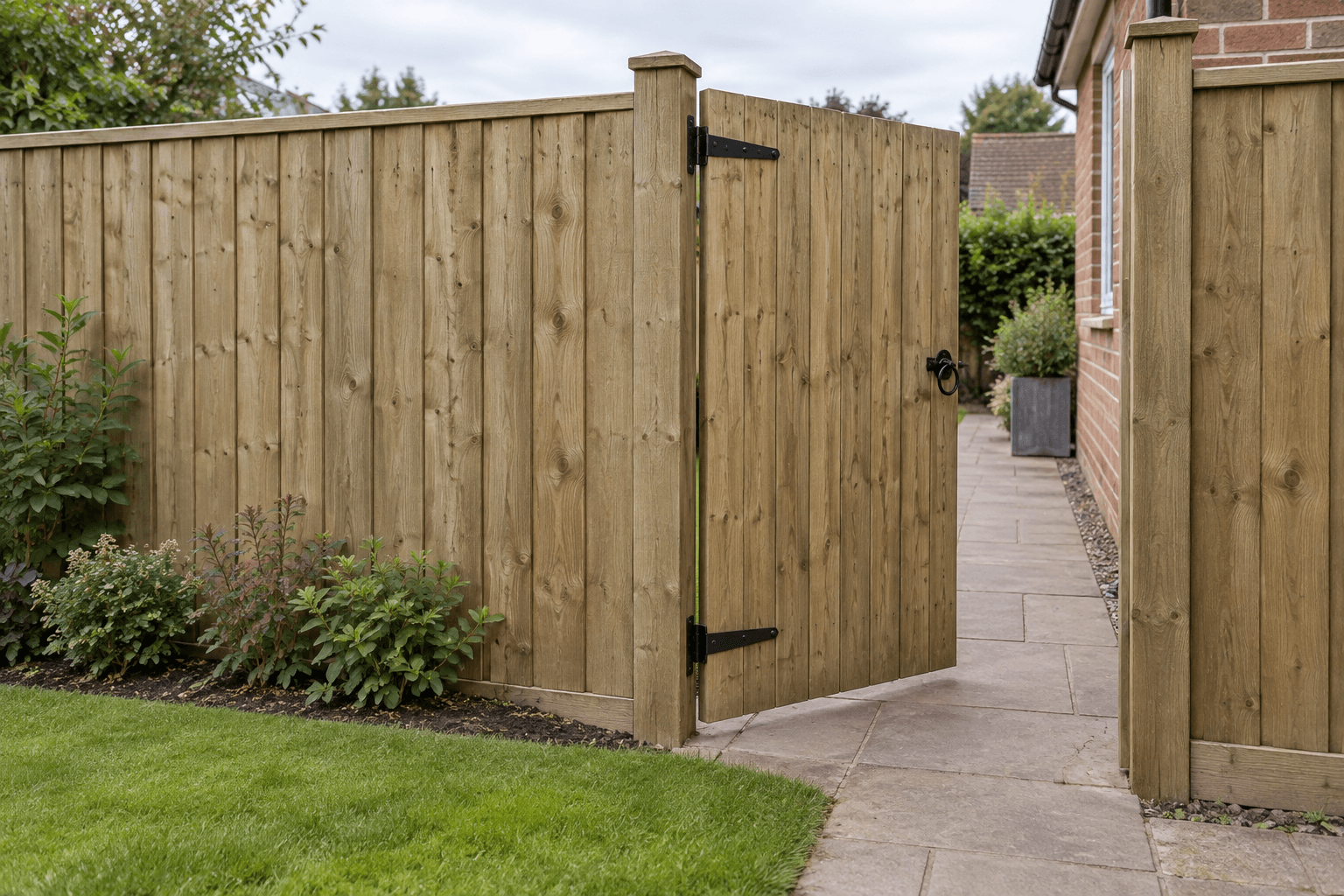
A gate should be a named line in the brief. Record its position, approximate opening width, direction of use and what needs to pass through it. If the existing gate is staying, say so. If a new one is wanted, show the posts or structures it would meet without assuming they can be reused.
GC Building and Landscaping can build and fit custom gates alongside fencing. That makes it possible to discuss the gate with the boundary work, but it should still have its own description. A quote for “fence and gate” is clearer when the fence length and gate requirement are not bundled into one phrase.
Make clearance a decision rather than a surprise
Plants, old panels, loose materials, ornaments and stored items can all occupy the working line. Mark each one as keep, move, remove or undecided. Do not move something simply because it appears inconvenient in a photograph; identify the constraint and agree how it will be handled.
GC Building and Landscaping also provides clearances and landscaping. If clearance is needed before fencing, put it on a separate line and say what material is present. If planting or ground work is wanted afterwards, describe the finished relationship to the new boundary instead of hiding it inside the fence request.
Use one page to compare quotations fairly
Build the brief in the same order for every quotation:
- Start point, end point and approximate boundary length.
- Repair, replacement sections or complete rebuild.
- Known line, uncertain points and access from each side.
- Ground changes, steps, planting and the route for materials.
- Gate position and whether it stays, changes or is newly required.
- Items to keep, move, remove or decide later.
- Any separate clearance, landscaping or property work.
Ask each quotation to identify what it includes for removal, materials, fitting, gate work and any follow-on landscaping. Keep open choices visible rather than forcing a premature specification. The purpose of the page is to ensure everyone is pricing the same outcome.
Questions customers ask
Do I need exact measurements before arranging a visit?
No. An approximate length, clear end points and photographs of the whole line are enough for the first conversation. The quotation can depend on measurements and conditions checked at the property.
Should a custom gate be included in the fence request?
Yes, if it forms part of the same boundary, but describe it as its own item. GC Building and Landscaping builds and fits custom gates, so the opening, position and intended use can be discussed with the fencing scope.
What should I do if the boundary line is uncertain?
Mark the uncertainty openly and resolve it before presenting the line as fixed. A builder can assess the proposed construction, while the property owners need to be clear about where that construction is intended to stand.
Read about GC Building and Landscaping’s landscaping and fencing work, then send the team the one-page brief with a wide boundary photograph, the access route and any gate or clearance decision. A clearly bounded request gives a builder a sound basis for an initial conversation and a quotation that can be compared line by line.